Enter your email address:

Delivered by FeedBurner

Showing posts with label Death. Show all posts

Saturday, August 8, 2020

The Persecuted

~Blessed are those who are persecuted for righteousness’ sake, for theirs is the kingdom of heaven. Blessed are you when men revile you and persecute you and utter all kinds of evil against you falsely on my account… for so men persecuted the prophets who were before you~

The final two beatitudes roll together and are usually treated together. In general, talk of “the persecuted,” would have reminded Jesus’ Jewish listeners not just of “the prophets who were before you,” but also of the period of intense persecution the Jewish people had not long ago undergone. Only a few generations before Jesus arrived on the scene, the Israelites were ruled by the Seleucid Empire, who had initiated a gruesome policy of anti-Jewish persecution. Antiochus IV, the Seleucid king, insisted the Israelites worship his Hellenistic pagan religion. He wanted them to worship the Greek pantheon. The Temple was ransacked and an altar to Zeus was set up. Observation of the Sabbath was no longer permitted. Possessing a copy of the Hebrew scriptures or having one’s child circumcised made one a criminal. In the worst cases, failure to adhere to Antiochus’ paganism could make one liable to death. None of this was ancient history for Jesus’ listeners. This would have been their grandparents’ generation. The memory was fresh. And it was a memory, we’re told, of when “the land shook for its inhabitants” (1 Macc 1:28).

Above all, though, when Jesus spoke of those who “revile you and persecute you,” their memory would have been drawn to the martyrs of this period. Most famous was the account of seven brothers and their mother who were tortured and killed for refusing to eat pork (2 Macc 7). Each was slowly cut limb from limb and placed into a frying pan while their remaining family looked on. “The smoke from the pan spread widely” (2 Macc 7:5). 

This all took on a renewed meaning for the first Christians, those standing by as Jesus preached the beatitudes. Jesus later told those disciples that, just like the seven brothers and their mother, they too will be “sent like sheep in the midst of wolves.” Indeed, he insisted that they “will be hated because of [his] name,” (Mt 10:16, 22). Certainly this came to pass. 11 of the 12 apostles were martyred somewhere or another across the ancient world. Mark had a rope thrown around his neck and was dragged through the streets of Alexandria. Peter was crucified upside down in Rome. In total, across the next 200 or so years, some 60,000 Christians were killed by the Roman empire, often in stadiums for entertainment.

These wounds cut deep into Jewish and Christian history. The harsh experience of persecution marks their imagination. But there is something very strange about the Jewish-Christian understanding of all this. Jesus puts his finger directly on it: “Blessed are those who are persecuted.” Blessed. It is the same strange paradox that marks all of the beatitudes. How can we call these tortured and murdered people blessed? How is it that, on his way to be martyred in Rome’s Circus Maximus, Saint Ignatius of Antioch wrote a letter insisting that the Christians there avoid intervening to save his life: “The only thing I ask of you is to allow me to offer the libation of my blood to God. I am the wheat of the Lord; may I be ground by the teeth of the beasts to become the immaculate bread of Christ.” How does suffering persecution ― even death ― constitute blessing, something, as Ignatius frames it, to be desired?

Let’s think about it this way: In his first beatitude, Jesus calls the “poor in spirit” blessed. If you think about it, when we possess none of this world’s joys, we must turn to the next world. We must turn to God. In a paradoxical way, it is then ― completely void of this world’s goods ― that we are most blessed. We are now open to receiving the blessings of God. We can finally hear God’s voice which, more often than not, is muted in our lives by our attachment to this world’s goods. Jesus says it is then that we inherit “the kingdom of heaven.” The interesting thing is that Jesus says the exact same thing in this beatitude ― the final beatitude. He similarly insists of the persecuted that “theirs is the kingdom of heaven.” 

It is the exact same principle. Jesus is insisting upon the exact same idea, but in a more final way. When the Christian and Jewish martyrs were faced with a decision between death but faithfulness to God or a return to life and the goods of this world, they chose “the kingdom of heaven.” Martyrdom is the final, grand witness to the fact that it is better to have literally nothing, not even life, than it is to betray God.  

One of those seven Jewish brothers was offered riches and a position of envy in the kingdom. He was offered every earthly blessing. He just needed to give up his Jewishness. His mother’s response is interesting. It’s not what you might expect. She leans over and whispers in her son’s ear: “I have reared you, brought you up, and taken care of you.” And then she says this: “Look at the heavens and the earth. See everything. Recognize that God did not make them out of things that already existed. So too you came into being” (2 Macc 7:27-28). Here’s what we must see: she reminds him in this moment of who God is. She reminds him that, as much as she is his earthly, biological mother ― the one who has helped to provide for his earthly goods ― God is the one who made him out of nothing. God is the one to whom he owes everything. “Do not fear this butcher,” she concludes. “Accept death” (2 Macc 7:29). Accept that the God who made you is worth giving everything up for, even your earthly life.

It is a remarkable, gritty, even gruesome level of faith. There is a reason the Church honors the martyrs with a special reverence. It is the same reason Jesus insists that those with this kind of faith, along with the “poor in spirit,” are already inheritors of the kingdom of heaven.

---

~Anthony Rosselli (PhD cand., theology, University of Dayton) writes out of St. Luke and Ascension Parishes in Franklin County, Vermont. These columns are archived here.

Click here to subscribe to these reflections by email (Note: you must verify the confirmation email!)

Friday, May 8, 2020

My Grandfathers


When I was 11 years old, I went to college basketball’s Final Four with my grandfather. As we descended the stairs one morning into the hotel restaurant, I saw Tom Izzo, the head coach at Michigan State. Izzo is the real deal. By then, he’d already won a national championship and been named national coach of the year three different times. He’s since been inducted into the Hall of Fame. He’s been so successful in the NCAA Tournament, they call him “Mr. March.” When I saw him, my 11-year-old eyes got really big.

The strange thing, though, was that when Izzo saw us, his eyes got really big. He stood up and rushed over to my grandpa: “Dom? Dom Rosselli?” They exchanged pleasantries as I looked on, dumbfounded. Eventually, grandpa introduced me. I don’t remember much of what Izzo said. But I do remember he finished with something like, “You know... Your grandpa? He’s the real deal.”

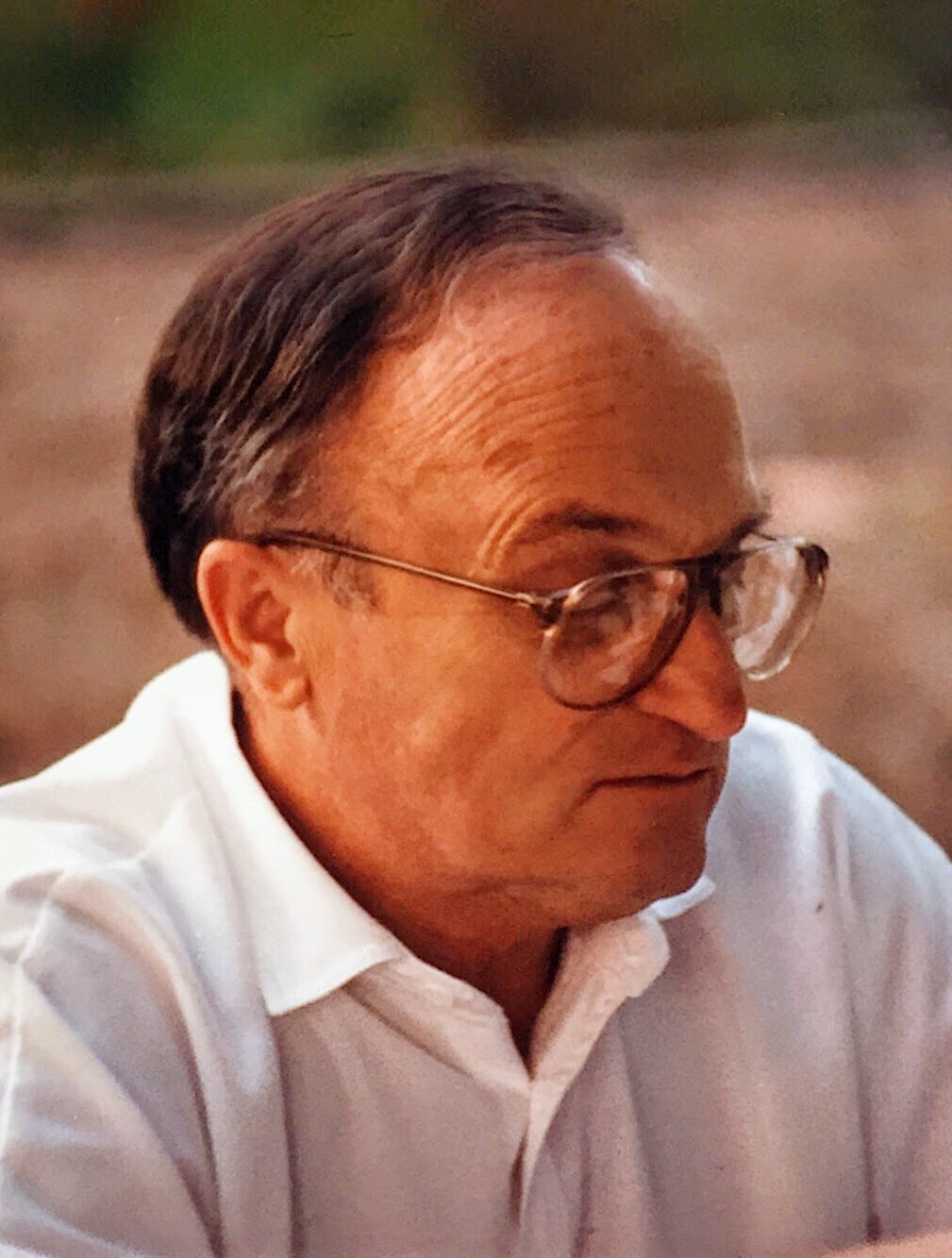
I actually did know. In his time, my grandfather, Dom Rosselli, was a college basketball coach himself. He was more than that. He was a legend. In fact, the very day I trembled in the presence of Tom Izzo, my own grandpa had won 357 more college basketball games than him. 

Dom Rosselli coached basketball for 38 seasons at Youngstown State University in Ohio. He collected 589 wins. He’s one of the winningest coaches in the history of the game. Several different organizations named him “Coach of the Year” throughout the 50s and 60s. He was even named, hilariously, “Italian Coach of the Year” in 1958. Not too long after his retirement, Youngstown State painted “Rosselli Court” on the floor of their arena and, several years later, erected an enormous statue of him outside its door. When he died, it was on ESPN. Flags in the city of Youngstown were flown at half mast. Tom Izzo was right. Dom Rosselli was the real deal.

Growing up, both sets of grandparents were just a short drive away. After the Final Four, we visited with my other grandparents. They wanted to know about the trip. My Grandpa Johnny did not move in the same circles as Dom Rosselli. While Dom was becoming a legend for the city of Youngstown, John Slovasky was making it smoke. For 35 years he worked in one of its famous steel mills. As a kid, I was just told that Johnny had “worked at the mill,” and so I pictured him as a man of the blast furnace and of molten iron, a hardened laborer. It turns out he did bookkeeping in one of the offices. But when the Youngstown steel industry was decimated in the late 70s, Johnny was one of the now unremembered 40,000 who lost their jobs. For years afterward, he wallpapered homes to make a living. 

I knew my Grandpa Johnny as an older man and, as I knew him, there wasn’t much to him. He was a quiet man, a calm man. He was a Buick man. He liked to talk about routes and avenues, about “the construction over on Tibbetts Wick.” He could always remember a good restaurant about halfway to someplace, but he could never remember its name. He hated the New York Yankees, but let his wife do the yelling at the TV. He had one of those senses of humor where you really wanted to be certain your girlfriend liked you before you let her meet him. He liked John Wayne. He fixed things with duct tape. When he died this week, it was not on ESPN.

Neither of my grandfathers were the sit-you-down-and-teach-you-a-lesson type. They weren’t going to leave you a book of aphorisms. The lesson was in the very doing of their lives. Simply moving among my grandfathers ― passing one the chocolate, losing to the other in chess ― was the lesson. It was on you to observe it. 

A few years before his death, Youngstown State made bobblehead dolls of Dom Rosselli. They were pretty hilarious. When I opened up the box, I noticed that Grandpa had actually written on the back. It was autographed. “Coach Dom Rosselli.” I was surprised by it. I’d never seen him autograph something. But it made sense. Dom Rosselli was, after all, a sportsman. Grandpa’s living room had more cups and plaques than did my small college’s trophy room. But even after spending hundreds of hours with the man ― after playing countless games of chess with him in that very living room ― I’d never heard him tell a single story about even one of those trophies. Not one story. That’s why, when I met Tom Izzo, I couldn’t attend to the fact that my own grandpa had, at that point, outgunned him by several hundred wins. In my mind, that’s just not who the man was. He wasn’t “Coach Dom Rosselli.” He wasn’t a legend. He was just “Grandpa,” who never held it against me for not improving at chess.

John Slovasky never autographed anything. He didn't even sign his checks correctly. His real name wasn’t Slovasky, after all. In the 50s, just after getting married, John decided that his original family name was a bit of a mouthful. He should just be Slovasky. But instead of legally changing his name, he just began to fill out paperwork with Slovasky. Who’s going to know? This isn’t significant, right? Eventually his identity was fudged over and he just sort of became John Slovasky. 

There is something very Johnny about that. There is something very Johnny about the simple shrug he would surely have offered if told he would need to legally change his name. This swings several ways. When Johnny was in the war, he was ordered to swim to retrieve nurses into a lifeboat in the Azores Islands. He didn’t know how to swim. “I was told to do it,” he shrugged just the same,
looking around for more chocolates. Johnny’s life was not very complicated. His business was that which was right in front of him. Johnny was sheer straightforwardness. He just, as the Buddhists like to say, “chopped wood and carried water.”

In reflections like these — recalling fathers and grandfathers — there’s a temptation to reflect on the way they embodied some bygone sense of toughness, how they taught you the meaning of strength. Oddly enough, my grandfathers taught me far more about weakness and about losing than they did about strength. Grandpa Rosselli had not a word to say to me about his 589 victories. To me, at least, when he talked about basketball he talked about losing at it. There were a few seasons when Dom Rosselli could have won a national championship. Across a few different divisions, he
coached in 13 postseasons. The year they were the tournament’s overall #2 seed, they were upset in the Elite Eight. There were seven times he coached in what is now the equivalent of the Sweet Sixteen. But a national championship never came. “Grandpa, how many games did you win in total?” I once asked him. He never gave me the answer. “I lost several hundred.”


When he was drafted, Johnny told the sergeant at the draft board that he had no interest in combat. His older brother had been killed in the Army while in France. When the letter came, he had to read it to his mother, who didn’t know English. He had no reverence for war. War was not a moment of strength, but of fear and of trembling. War killed his brother and broke his mother. He never told stories of the war. My aunt had to press the story about the nurses in the Azores out of him some 65 years later. [1]

One of the unspoken lessons of my grandfathers, as I gather it, is that strength is far less meaningful or important than we often think — that the real contours of who we are are formed, not in our strength, but in our failure, our fear, and in our trembling. 

At heart, I am an academic. And as an academic, one of the last things I would ever give up is my narcissism. I’m certain of my call to do extraordinary things with my life, convinced of the exceptional urgency of my projects. But this puts me at odds with everything my grandfathers taught me. Dom Rosselli was one of the best coaches in the history of college basketball. “They wanted to fire me,” he once remembered in an interview, thinking of a bad stretch. “Eh. I could find another job... maybe make more money. Maybe they would’ve been doing me a favor.” As an academic, I’m desperate for everything I do to be taken seriously. Johnny didn’t want to be taken seriously. He wanted to be at home near his wife. He wanted to read the newspaper. He wanted Derek Jeter to strike out.

We live in a meritocracy, a society that insists we must hustle to do singular and exceptional things. A central dogma of modern life is that we have to be strong and independent. Johnny’s later life, on the contrary, was one of physical weakness and radical dependence upon his wife. His world was one where even just sitting and standing were extraordinarily difficult. The insistence that we “not mention those kinds of things” is precisely the lie of the meritocracy, the false dogma that the only beautiful part of life is the part that’s lived in strength and health. On the contrary, Johnny’s weakness was precisely the space in which it became all too clear how much he was loved. In the last months of his life, as my Bubba would help him get situated around the house, she’d sometimes stop for a hug. “Why do you want to hug me?” he’d ask. Screaming, because he could hardly hear: “because I love you!”

Neither of my grandfathers were the sit-you-down-and-teach-you-a-lesson type. They never really told me a lot of stories. They told their stories in the very doing of their lives. It was on you to observe it. As I look back, it seems like their lives taught me the odd lesson nobody ever wants to tell a story about. My grandfathers taught me that the far more significant moments in life are the moments when you lose, when you never win a championship, when you get laid off, when you’re not the real deal. They taught me that, compared to the family itself, a family name is interchangeable, that it deserves nothing more than a shrug, even if it’s memorialized on an arena floor. They taught me that you come into contact with what’s really important when you’ve been humbled, or when your body is broken, or when you’re afraid, and not when you’ve won by 20. Life is very rarely about the impressive stuff ― about blast furnaces or 589 wins ― but is more often about straightforward humility and about weakness. Neither of my grandfathers were the sit-you-down-and-teach-you-a-lesson type. The lesson was in the very doing of their lives. It was in the sitting and in the standing. It was in John Wayne. A good restaurant about halfway to someplace. In 589 wins. 388 losses. 0 national championships. It was in humility. Weakness. And it was on you to observe it.

---

~Anthony Rosselli (PhD cand., theology, University of Dayton) writes out of St. Luke and Ascension Parishes in Franklin County, Vermont. These columns are archived here.

Click here to subscribe to these reflections by email (Note: you must verify the confirmation email!)

--

Endnote:

[1] Maribeth Slovasky, Of Lessons Learned: An Interview with My Father

Sunday, April 12, 2020

On the Dying and the Rising of Jesus - For Easter

A few weeks ago, an Italian filmmaker named Olmo Parenti released a 3-minute clip from inside the COVID-19 ward at Milan’s Polyclinic. [1] The images are painful and disheartening. They are images of death. What struck and surprised me, though, was how quiet the ward was. We’ve been using the language of war. Government officials keep comparing the virus to an “enemy.” We talk about health personnel being on the “front lines.” I was thinking the hospitals might be chaotic and loud, like the shouting in a field hospital in battle where nurses and doctors frantically try to save the wounded. But Parenti’s film captures mostly just the sad and tired eyes, the faint gasping, the soft hum of machines. It’s all very quiet.

Death is quiet. To die is to be brought to a terrible quiet. It is to be silenced. The death of Jesus would have been quiet. We are told that “there was darkness over the whole land” (Lk 23:44). Surely there was also quiet. The gospels mention an earthquake at Jesus’ final breath (Mt 27:51). It does not say the crowds screamed and panicked. After seeing Jesus die, we read that “the multitudes … returned home beating their breasts.” His mother stood by and mourned. No one records her saying a word (Lk 23:48-49).


Out of New York, where the COVID-19 outbreak remains most acute, we are now seeing images of the makeshift morgues. They are refrigerated trailers lined with plywood shelving. Each day, hundreds of corpses are labelled, wrapped in white blankets, and then piled upon a wooden shelf. Hundreds. Each day. There is nothing more the hospitals are able to do. For the time being, it’s the most dignified they’re able to make it. With each body, the trailers are closed up, locked, and sealed. This is their makeshift tomb. This is their terrible silence. 


It’s the sheer ocean of these deaths, nearly 7,000 each day across the world right now. It’s the piling of them onto plywood shelving. It’s death telling us to be quiet, that we’re nothing. Death tells us, as these poor corpses are shuffled around in trailers, that the names on the shelf will eventually be scratched out and replaced with our own. It tells me that I myself am replaceable, that I’m unnecessary, that I’m insignificant. It tells me that the things I do in this world are unimportant, that anything I might have to say will ultimately be brought to silence anyway. It tells me that ultimately death and plywood are what’s waiting for me. That even my death will not stand out, that they’ll just lift me onto a wooden sheet and go get the next one. That no Joseph of Arimathea will be able to collect me, should he even remember.


The death of Jesus ― his burial in the tomb ― tells us all the same things. Everyone was so excited about this man. He set the world on fire with his preaching, with his miracles, with his acts of tenderness and mercy. “All the crowds, when they saw him, were greatly amazed, and ran up to him and greeted him” (Mk 9:15). But now he was dead. Silenced. He’s been brought to nothing. Just like you and I will be dead. He was sealed in a tomb. 


It was devastating for his followers. In the days after Jesus’ death, we read about how the disciples had earlier “hoped that [Jesus] was the one to redeem Israel,” but now they just “stood still, looking sad” (Lk 24). Even when Mary Magdalene had gone to the tomb and found it empty, she did not rejoice, but wept: “They have taken away my Lord and I don’t know what they’ve done with him” (Jn 20:13).


Death conquers with an unbearable harshness. But this is precisely why Easter, in a sense, is the only thing that actually matters. As Saint Paul said, “if Christ has not been raised, your faith is futile” (1 Cor 15:17). As Mary Magdalene stood beside the empty tomb, she noticed a man standing behind her. She “thought he was the gardener.” “Tell me where you have laid him,” she shouted amidst the tears, “and I will take him away!” (Jn 20:15)


The man simply spoke her name, “Mary.” 


"Rabbi!" (Jn 20:16)

Our death will be the feast day of our human weakness and our fragility. It will be the feast day of our smallness. But our death will also be the feast day of our union with Jesus. [2] Our rabbi, our teacher, our God has gone before us into the nightmare of death. And if the living God can go into that abyss and then come out of it to speak our names then it means that we are not insignificant, that each of our names matters. Easter means our own death, our own life ― even if it is hidden and undignified ― is seen and measured. It means that our death is not the end of our significance, but the climax of our significance. Our death is the moment where we are most like Jesus ― the Jesus whose death was not the end, but the beginning.

---


Endnotes:

[1] Olmo Parenti’s disturbing short film, “One Meter Away,” can be seen here.
[2] F.X. Durrwell said something similar in the 60s, but about humility. See In the Redeeming Christ (New York: Sheed and Ward, 1963), 234.

---


~Anthony Rosselli (PhD cand., theology, University of Dayton) writes out of St. Luke and Ascension Parishes in Franklin County, Vermont. These columns are archived
here.

Click here to subscribe to these reflections by email

Saturday, April 4, 2020

Death, Holy Week, and COVID-19

It is Holy Week, the most important week of the liturgical year, the week we memorialize Jesus’ culminating paschal days. Granted, there are joyful moments ― Jesus’s triumphant arrival into Jerusalem on Palm Sunday, for instance. But the whole thing is overshadowed by the day St. Ambrose simply called “the Day of Bitterness,” the day Jesus was murdered. Holy Week is a grave week. The ancients sometimes called it “Painful Week,” and not just because they ramped up their fasting.


This is, as you know, an especially odd Holy Week. We won’t be together for it. And yet, there is a sense in which the gravity of Holy Week is being brought home far more poignantly than usual on account of this situation. Our attention is being drawn to the thousands of dying COVID-19 victims. Right now, we are being bombarded with reminders of human fragility and death. This is very Lenten. We are meant, during this season, to meditate upon human mortality, including our own. Indeed, the news cycle has been a constant reminder that “we are dust and to dust we shall return” (Gen 3:19).


There is something natural, right, and good about mourning amidst this present crisis. We should be grieving the evil of this pandemic. Indeed, it would be wrong to be unmoved: “Woe to those who rest easy in Zion… who are not grieved over the ruin of [their brethren]” (Amos 6:1, 6). But Holy Week invites us to do more than just grieve for the victims of COVID-19. Indeed, if our vision is confined to the pain of this current crisis, we can get trapped inside the logic of anxiety and despair. In the coming weeks, as the virus begins to peak, we are going to see staggering numbers of deaths in our country. But the Church’s liturgy this Holy Week invites us to place our vision not just upon the agony of the world. It invites us also to place our vision upon the agony of Jesus. That is the point of Holy Week. Indeed, if you keep your eyes fixed only upon the news and never upon Jesus, how can you help but descend into anything but hopelessness? [1]


The interesting thing about Christianity is that, each year, we turn during Holy Week to meditate upon the mysteries of the Cross not because we want to lock ourselves into a logic of pain over the death of Jesus. On the contrary, Christians meditate upon Jesus’ agony and death because we know that his death is not the last word. And that is precisely the reason why we should take up Holy Week’s invitation to meditate upon Jesus’ agony and death in this season of COVID-19.


These are scary times. These are times that remind us that we too will someday die. Lent is meant to remind us of the same thing. The scenes of the outside world ― horrible scenes of pain and loss ― place before our eyes not only the pains of COVID-19 patients, but they can lead us also to the gasping pain of Jesus on that “Day of Bitterness.” If we keep the death of Jesus before us, then we’ll remember that his death was not the last word. And we’ll know, too, that all these COVID-19 deaths are not the last word. And the lost jobs, and the soaring domestic violence, and the mounting sense of social isolation ― if we keep the death of Jesus before us, we’ll remember that all of this decay and failure and woe is never the last word. And all these “Fridays” will somehow turn “Good,” even if that’s not until the next world. Let’s not forget to place the suffering Jesus before our eyes this week. He is the only way any of the victims have hope. He is the only way you and I have hope.

---

Endnote:
[1] Hans Boersma made this point in First Things this week. “Meditation on COVID-19,” April 2, 2020, available here.

---

~Anthony Rosselli (PhD cand., theology, University of Dayton) writes out of St. Luke and Ascension Parishes in Franklin County, Vermont. These columns are archived here.

Click here to subscribe to these reflections by email

Friday, January 17, 2020

The Lion and the Lamb - 2nd Sunday in Ordinary Time

John 1:29-34
John the Baptist saw Jesus coming toward him and said,
“Behold, the Lamb of God, who takes away the sin of the world.
He is the one of whom I said,
‘A man is coming after me who ranks ahead of me
because he existed before me.’
I did not know him,
but the reason why I came baptizing with water
was that he might be made known to Israel.”
John testified further, saying,
“I saw the Spirit come down like a dove from heaven
and remain upon him.
I did not know him,
but the one who sent me to baptize with water told me,
‘On whomever you see the Spirit come down and remain,
he is the one who will baptize with the Holy Spirit.’
Now I have seen and testified that he is the Son of God.”


---


Why do we call Jesus a lamb? Why does John the Baptist, upon seeing Jesus, shout to the crowd, “Behold the Lamb of God who takes away the sin of the world”? How exactly is Jesus a lamb? And how do lambs take away sin?

For an answer, we need to go way back in time. Nearly 700 years before Jesus, the prophet Isaiah recorded a series of poems about a mysterious figure called the “suffering servant of the Lord.” In the fourth and final poem, we read about how this servant will undergo agony and humiliation: “He was despised and rejected.... He was oppressed and he was afflicted.” Yet, because of this, the suffering servant will receive honor, prosperity, and life (Is 53).

What is interesting is that this “suffering servant” is strangely described as a lamb that is led to the slaughter, a sheep that before its shearers is dumb” (Is 53:7). On top of that, this lamb is supposed to “make himself an offering for sin.” Indeed he is supposed to “bear the sins of many” (Is 53:10-11). 

So when John the Baptist sees Jesus and shouts to the crowd: behold the Lamb of God who takes away the sin of the world, we now know the reference. John is recalling Isaiah’s suffering servant — the one who will be despised and rejected, oppressed and afflicted. The one who will bear the sins of many. 

That’s all fine and good. But is there something yet to learn from the image of the lamb itself? Why, of all things, a lamb

A lamb is nonviolent. A lamb is meek. They are followers, not leaders; hunted and never hunters. They do not defend their territory. They are silent when they feel pain. This is the exact opposite of another image the scriptures sometimes use to describe Jesus: the lion

In the last book of the Bible — the Book of Revelation — we see an extraordinary apocalyptic vision of heaven’s throne. We see people weeping because none of the angels are powerful enough to open a certain mysterious scroll. “Weep not!” a strange figure announces, the Lion of Judah has conquered so that he can open the scroll!” (Rev 5:5)

But when we finally see the scroll opened, it is not by a lion. It is opened, rather, by “a slain lamb.” At that moment, the text says there broke out in heaven “the voice of many angels, numbering myriads of myriads and thousands of thousands, saying with a loud voice: ‘worthy is the Lamb who was slain, to receive power and wealth and wisdom and might and honor and glory and blessing’” (Rev 5:11-12).

The slain lamb, of course, is Jesus. He is also the lion. Indeed, Jesus is both lamb and lion. He is, like a lamb, hunted. He is hunted by our sins. He is oppressed and afflicted, bowed down and killed by them — “like a lamb led to the slaughter.” Instead of defending his territory, he “turns to them his other cheek also” (Mt 5:39). Like a lamb, he is silent through the pain. 

But it is precisely in this that he is also like a lion. Jesus once said, “my power is made perfect in weakness (2 Cor 12:9). It’s one of the most startling things he ever said. “Although he was crucified through weakness,” St. Paul would go on to write, “[Jesus] lives by God’s power (2 Cor. 13:4). He was killed, yes, but he lives. He was raised. The lion-like strength of God is revealed most vividly in the places of human weakness. Indeed, Jesus was only raised by way of a human death. He was a lion by being a lamb. It is the same with us. The place in your life where you are most weak and broken is precisely the place where you are most in contact with God’s mercy, with God’s strength. “When I am weak,” Paul said, “then I am strong” (2 Cor 12:10).

He is lamb and he is lion; he is death and he is resurrection. He cannot be resurrected unless he dies; he cannot be glorified unless he is humiliated. The lion needs the lamb. In the Book of Revelation, only the wounded lamb was powerful enough to open and read from the scroll of God. In life, how true it is that only the soul that’s been wounded can truly grasp what it means to live well, to love, to be merciful.


Click here to subscribe to these reflections by email